Ningol Chakouba: A Celebration of Love and Tradition

Ningol Chakouba: A Celebration of Love and Tradition

Ningol Chakouba: A Celebration of Love and Tradition

Exploring the profound beauty and cherished customs of a beloved Meitei festival.

A depiction of a festive family feast for Ningol Chakouba

A symbolic representation of the grand feast that brings families together.

Every year, as the gentle autumn air settles over Manipur, the spirit of reunion fills every home. This is the season of Ningol Chakouba, the most anticipated festival for the Meitei community, which is celebrated on the second day of the new moon of the Meitei lunar month of Hiyangei (Hiyangei Nini Panba). The name itself, "Ningol" (married daughter/sister) and "Chakouba" (invitation for a meal), beautifully encapsulates its essence: a day dedicated to honoring the sacred bond between daughters and their parental homes.

The Heartbeat of Tradition: A Day of Reunion

The beauty of Ningol Chakouba lies in its simplicity and profound emotional depth. It is a festival that transcends religious boundaries, focusing purely on the love that holds a family together. The day begins with a formal invitation from the sons or the head of the family to their married sisters and daughters, inviting them back to their 'Mapam' (parental home).

On the day of the festival, women dress in their finest traditional attire—the elegant Phanek and Innaphi—and travel with their children to the homes where they grew up. The air is thick with nostalgia, laughter, and the aroma of a grand feast being prepared. The highlight is the 'Chakouba', a lavish meal featuring traditional Meitei delicacies, all lovingly cooked by the brothers and fathers.

A Feast for the Senses and the Soul

The Chakouba is more than just a meal; it's a culinary celebration of love. The menu is a vibrant tapestry of Meitei cuisine. Dishes like Nga-thongba (a flavorful fish curry), Ooti (a classic lentil dish), and the piquant Eromba (a chutney of boiled vegetables and chili) are prepared with immense care. Each dish tells a story, a taste of childhood and home that a 'Ningol' fondly remembers.

This gathering is a reaffirmation of love. It’s a day for a 'Ningol' to set aside her responsibilities and simply be a daughter again, cherished and pampered. It’s a day for sharing stories, strengthening ties between cousins, and creating memories that will be treasured until the next reunion. The blessings ('Dakshina') given by the elders are not just gifts but symbols of their unending affection and prayers for her well-being.

A Modern Dilemma: When Gifts Outweigh Gestures

"The festival was once about the simple gift of presence. Now, for many, it's about the presence of expensive gifts."

Despite its beautiful origins, a modern criticism has cast a shadow over Ningol Chakouba. The tradition of giving a heartfelt gift as a token of blessing has, in recent times, sometimes spiraled into an unhealthy competition. The focus can alarmingly shift from the emotional reunion to the material value of the gifts exchanged.

This commercialization can place social and financial pressure on families, creating a stressful environment that contradicts the festival's core spirit of unconditional love and togetherness. A festival meant to celebrate unity can inadvertently create anxiety when the value of a relationship is wrongly measured by the price tag of a gift.

Reclaiming and Cherishing the True Spirit

Ningol Chakouba is a cultural treasure, a beautiful tradition that celebrates the enduring strength of family bonds. To preserve its sanctity, it is crucial to look beyond the glitter of materialism and reconnect with its roots. The greatest gift one can offer is time, attention, and genuine affection.

Let us hope that the pure essence of this beautiful festival always prevails—where the warmth of a shared meal, the comfort of a childhood home, and the unconditional love of family are cherished as the most valuable gifts of all.

References

  • "Ningol Chakouba." E-pao.net, The Hueiyen Lanpao. Accessed October 19, 2025.
  • "Significance of Ningol Chakkouba Festival in Manipur." Imphal Free Press. Accessed October 19, 2025.
  • Sharma, P. (2022). "The Changing Dynamics of Traditional Festivals: A Case Study of Ningol Chakouba." Journal of Indigenous Cultural Studies.

Unveiling the Ancient Roots: The Origin and Lost Wisdom of the Meitei People

Unveiling the Ancient Roots: The Origin and Lost Wisdom of the Meitei People

Meitei History & Culture

The majestic Koubru Mountain Range under a clear sky
The Koubru Mountain Range, believed to be the cradle of Meitei civilization.

For millennia, the valley and hills of the land historically known as Kangleipak (now Manipur) have cradled a unique and profound civilization. The Meitei people, the primary inhabitants of the valley, possess a history that stretches back into the deep annals of time, long before the advent of Hinduism in the 18th century reshaped its cultural landscape. This post delves into the indigenous origins of the Meitei race, drawing from ancient Puyas (sacred scriptures), archaeological findings, and historical traditions to piece together a narrative free from later fabrications and to reveal the astonishing depth of their ancient knowledge.

The Primordial Homeland: Koubru Mountain

According to ancient Meitei tradition, the story of their origin does not begin in the fertile plains of the Imphal Valley but on the majestic peaks of the surrounding mountains. Living tradition points to the Koubru mountain range as the 'incubation centre' of the Meitei race. This was a time when the valley itself was submerged under a great body of water. Archaeological evidence from sites like Tharon Cave in Tamenglong, which has yielded tools from the Paleolithic period, supports the claim of extremely ancient human habitation in the region's highlands.

"Awang Koubru Assuppa,
Leima-Lai Khunda Ahanpa,
Nongthrei Ma-u Lingliba,
Eerik Mapan Thariba,
He Lainingthou!"

This verse reveres the Koubru mountain as the first habitation of the 'Leima-Lai'—the ancestors of the Meitei—where the Creator God, the Lainingthou, first planted the seeds of life. This tradition remains vibrant, with thousands of Meitei making an annual pilgrimage to Koubru to honor their ancestors and the Creator.

From 'Leima-Lai' to 'Meetei'

In the pre-historic and proto-historic periods, the ancestors of the Meitei were known as the 'Leima-Lai' people. The term is a compound of 'Leima' (woman/female) and 'Lai' (man/male/god). This nomenclature reflects a deep genealogical connection to their creator deities. As stated in the Puya, Wakoklon Heelel Thilel Salai Amailon Pukok, the Meitei race traces its lineage directly to the Universal Lord. The racial name 'Meetei' developed much later, around 2000 B.C., after the people descended from the hills and established a sophisticated civilization in the newly dried Imphal Valley. The scripture explains that the name signifies a man born on Earth who is an incarnation of the divine image ('Mi').

The Sanamahi Faith: A Unique Cosmogony and the Concept of the Fatherland

The original religion of the Meitei, Sanamahism, is one of the most ancient faiths in the world. It is centered around a profound philosophical concept of a single, formless, universal creator known as Eepungloinapa Apakpa. From this primordial being emanate other deities, including Leimarel Sidabi, the supreme mother goddess of earth, water, and household, and her son, Sanamahi, the creator and guardian of life. The creation theory, as detailed in the Puyas, begins not with an act of making, but with a state of being: Talang Malang, a primordial, indeterminate state where the One God existed alone. This belief system extends to the very land itself. The country of Kangleipak was not viewed as a mere territory but as a personification of the Universal Father God. This is why, in Meitei tradition, the concept is not of a Motherland, but of a Fatherland, an entity to be worshipped and defended as a divine protector.

The Dawn of a Monarchy and the Seven Salais

The beginning of the written political history of Kangleipak is marked by the establishment of a monarchy. Based on calculations from the Maliyapham Palcha Era mentioned in the Puyas, the first political monarch, Konchin Tukthapa Ipu Athoupa Pakhangpa, ascended the throne at Kangla around 1737 B.C. This event heralded the 'Meetei Era'. His seven sons—Mangang, Luwang, Khuman, Angom, Moilang, Khapa-Nganpa, and Salai Leisangthem—became the progenitors of the seven great clans, or 'Salais', that compose the Meitei race. This structure formed a unique system of governance described as a 'Unitary Federalism'.

Ancient Insight

The concept of "Phun" (zero) in ancient Kangleipak was not one of nothingness. Instead, it represented the very basis of life, a concept akin to a precious drop of blood or life-essence, showcasing a deeply philosophical approach to mathematics.

Pillars of an Ancient Civilization

The Kanglei Meetei Eeyek: A Scientific Script

Around 2000 B.C., the Meitei developed their own script, the Meetei Eeyek, originally consisting of 18 alphabets. This system is not pictographic but alphabetic, based on the scientific principle of the phoneme—where each symbol corresponds to a distinct sound. Remarkably, the names of the alphabets are derived from parts of the human body, reflecting a deep philosophical connection between the human form and the creation of knowledge. Nine additional letters were added later to accommodate sounds from other languages.

Advanced Mathematical and Astronomical Knowledge

The ancient Meitei possessed a sophisticated understanding of mathematics and astronomy. Their numerical counting system was vast, extending to the number 'Pu Ama,' which represents one followed by thirteen zeros (10 trillion). Their astronomical prowess allowed them to predict eclipses and establish a precise calendar. Uniquely, the Meitei day began at midnight ('Nongyai'), demonstrating a clear understanding of the Earth's rotation.

The Lallup System: A Nation in Arms

The Lallup system was a compulsory public service for all indigenous males between the ages of 16 and 60. It was a sophisticated dual-purpose system: members served as soldiers during wartime and as a labor force for public projects—such as building roads, canals, and temples—during peacetime. This ensured that the kingdom could rapidly mobilize a formidable fighting force, renowned for its cavalry and its unique dart weapon, the 'Arambai,' while also maintaining and developing its infrastructure.

The Yek-Salai System: Ancient Genetic Wisdom

The Yek-Salai culture strictly prohibits marriage between a man and a woman belonging to the same Salai. This was not a social taboo but was based on a profound understanding of genetics. The Puyas explain that the union of two similar 'Iliks' (bloodlines or genes) creates 'Yek' (enmity), leading to the decline of the lineage, an incredible insight predating modern genetics by millennia.

Rich Cultural Heritage

The Meitei civilization developed unique forms of art and recreation. The traditional martial art of Thang-Ta ("The Art of the Sword and Spear") is an ancient and sophisticated system of combat. Furthermore, the modern game of polo is widely believed to have originated from the traditional Meitei game of Sagol Kangjei, which was played with seven players on each side on the local ponies. The most important pre-Hindu festival, Lai Haraoba ("The Merrymaking of the Gods"), is a ritualistic celebration that re-enacts the creation of the universe through intricate dance and music.

The Great Erasure: Puya Meithaba and Historical Distortion

The rich history of Kangleipak faced a catastrophic turning point in the 18th century. With the ascent of King Pamheiba (Garivaniwaz) and the influence of the Hindu missionary Santi Das Gosai, Hinduism was forcibly imposed. This led to the tragic event known as the 'Puya Meithaba'—the wholesale burning of hundreds of ancient Meitei scriptures. This act was a deliberate attempt to erase the indigenous identity and fabricate a new history. The name of the land was changed from Kangleipak to 'Manipur' to create a false connection to external mythologies. The conflict of nationality provoked by later rulers led to invasions from the Burmese Konbaung dynasty, culminating in the devastating "Seven Years' Devastation" (Chahi Taret Khuntakpa) from 1819-1826. This period led to the death of nearly two-thirds of the population and plunged the history of Kangleipak into obscurity, necessitating the careful reconstruction we undertake today.

A Timeline of Kangleipak's Ancient History

c. 30,000 B.C.

Paleolithic artifacts from Tharon Cave suggest very early human presence in the region.

c. 2000 B.C.

The Lai people become the Meetei race. Development of the 18-alphabet Meetei Eeyek script.

c. 1737 B.C.

Konchin Tukthapa Pakhangpa ascends the throne, establishing the Kangleipak monarchy.

18th Century A.D.

King Pamheiba imposes Hinduism. The 'Puya Meithaba' (Burning of Scriptures) occurs.

1819-1826 A.D.

The "Seven Years' Devastation" (Chahi Taret Khuntakpa) by the Burmese empire depopulates the land.

A Shared Lineage: Dispelling the Myths

One of the most crucial revelations from the ancient texts is the shared ethnic origin of the valley-dwelling Meitei and the peoples of the surrounding hills. The Wakoklon Puya explicitly states that as the descendants of the seven Salais multiplied, "some of them had gone to the high hills." These people became the ancestors of the various hill tribes. This scriptural evidence refutes later, politically motivated narratives that created a division between the people of the plains and the hills.

"As the descendants of his sons increased in number by leaps and bounds, some of them had gone to the high mountains... climbing up the high mountains became their nature, in that way, (They) happily lived on the mountains."

Conclusion: Reclaiming a Lost Heritage

The historical, archaeological, and literary evidence overwhelmingly points to the Meitei as an ancient, indigenous people with a unique and self-contained civilization that originated in the land of Kangleipak. The establishment of their monarchy, the development of their own scientific script, and their profound philosophical concepts all occurred thousands of years ago. The destruction of their records was a great loss not just for the Meitei, but for the world. Reclaiming this history is not just an act of remembrance but a vital step in restoring the true identity of a proud and ancient people.

Share This Story

References

  • Chingtamlen, Wangkhemcha. A Short History of Kangleipak (Manipur) Part - I & II . The Kangleipak Historical & Cultural Research Centre, 2005.
  • Kamei, Gangmumei. A History of Manipur: Pre-colonial Period. Akansha Publishing House, 2004.
  • Hodson, T.C. The Meitheis. David Nutt, 1908.
  • Singh, O.K. "The Archaeology of Manipur". Man and Environment, vol. 8, 1984, pp. 60-63.
  • Parratt, Saroj Nalini. The Religion of Manipur: Beliefs, Rituals and Historical Development. Firma KLM, 1980.

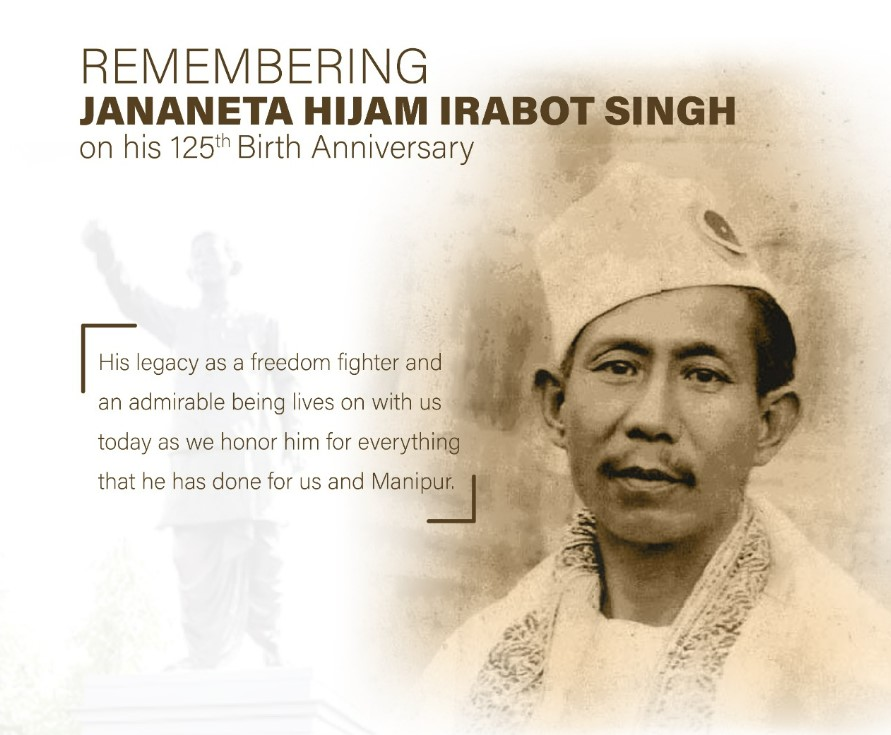
A tribute to Hijam Irabot revolutionary who transformed modern Manipur.

Lamyanba Hijam Irabot - The Pioneer of Modern Manipur

Lamyanba Hijam Irabot

The Pioneer of Modern Manipur

September 30, 1896 September 26, 1951
Jana Neta (Leader of the People) Lamyanba (The Pioneer)

A renaissance man who defied categorization - poet, journalist, dramatist, social reformer, and communist revolutionary who transformed from a palace insider to the champion of the oppressed masses.

Jananeta Hijam Irabot Singh
Scroll to discover

From Palace to People

Early Life

Born into poverty and orphaned at a young age, Irabot's life took a dramatic turn when he married Princess Khomdonsana and gained entry into the royal court. This paradoxical position as both an insider and outsider shaped his revolutionary consciousness.

Education

Studied at Johnstone School in Imphal and later in Dhaka, though forced to drop out due to financial hardship. Founded student organizations Bal Sangha and Chhatra Sanmelan during his school years.

Transformation

His appointment to the Sadar Panchayat Court gave him a front-row seat to systemic oppression, leading to his eventual resignation and complete dedication to the people's cause.

Multifaceted Contributions

📰

Journalism

Founded Meitei Chanu (Manipuri Woman) in 1922, the first handwritten journal in the region, followed by Anouba Jug (The New Era). Used press as a weapon to awaken political consciousness and advocate for non-cooperation movement.

✍️

Literature

First modern poet of Manipur, authored Sheidam Sheireng poetry collection prescribed as school textbook. Literary works gave voice to farmers and workers, depicting their struggles with powerful imagery.

🎭

Theatre

Founded Manipur Dramatic Union (MDU) in 1930, designed symbol of two crossed ploughs representing cultivation of cultural landscape. Used theatre to reach masses and embed revolutionary vision in cultural organizing.

⚖️

Social Reform

Led campaigns against religious exploitation through Mangba-Sengba (pollution-purification) system. Direct assault on corrupt pillars of feudal state's economic and political power.

The Revolutionary

The Second Nupi Lan (1939)

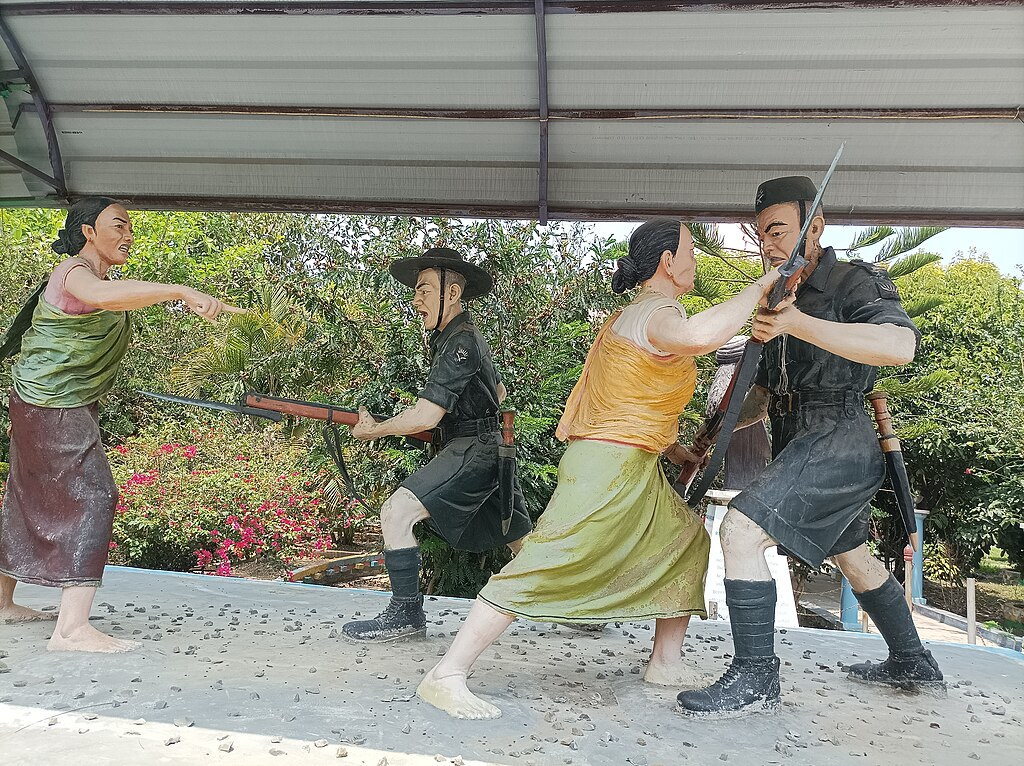
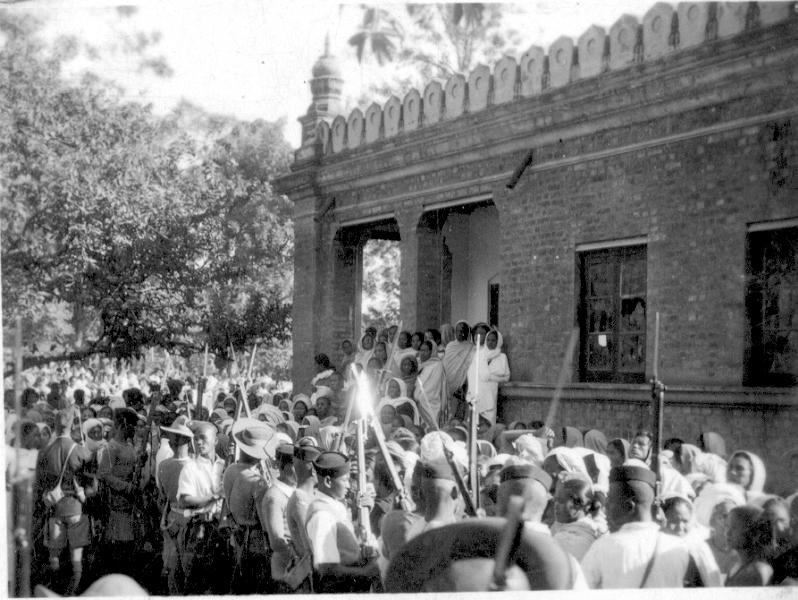
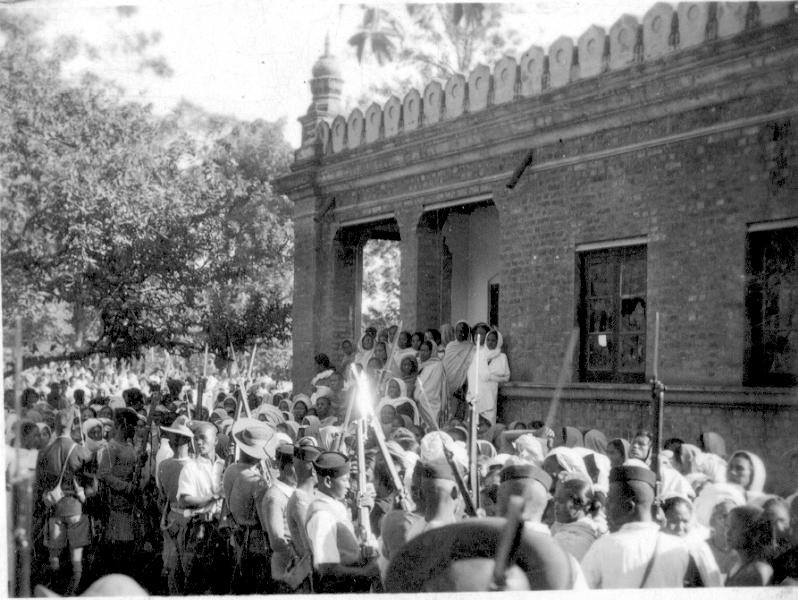
The Second Nupi Lan (Women's War) of 1939 was the catalyst that transformed Irabot from reformer to revolutionary. This mass uprising against artificial famine created by unchecked rice exports by Marwari traders saw Irabot rush back to support the movement, forming Praja Sanmelani when mainstream hesitated.

Statues depicting Nupi Lan (Women's War) of 1939

Communist Transformation

Prison in Sylhet Jail (1940-1943) where he met communist leaders Hemanga Biswas and Jyotirmoy Nandi marked his ideological transformation. His vision became a Socialist Manipur in socialist India free from imperialism, feudal and capitalist exploitation.

0 Years in Prison
0 Communist Party Founded
0 Years of Life

Revolutionary Timeline

1896

Born in Imphal

Beginning of life of seminal figure in Manipuri history

1934

Co-founded Nikhil Hindu Manipuri Mahasabha

Began formal socio-political organizing

1938

Transformed NHMM into secular political party

Dropped 'Hindu' from name, demanded legislature, called for Rani Gaidinliu's release

1939

Resigned from Sadar Panchayat

Formally severed ties with state apparatus

1940

Arrested for supporting Second Nupi Lan

Direct confrontation with state led to imprisonment

1940-43

Imprisoned in Sylhet Jail

Met communist leaders and embraced Marxism-Leninism

1943

Attended first CPI Congress in Bombay

Formalized association with national communist movement

1948

Won Manipur State Assembly election

Achieved democratic mandate from Utlou constituency

1948

Pungdongbam Incident and going underground

Abandoned parliamentary path for armed struggle

1951

Died in Anggo Hills, Burma

Revolutionary pioneer's life ended in wilderness

Enduring Legacy

Official Memory

State commemorates September 30 as Jana Neta Hijam Irabot Day

Public Memory

Symbol of ideal leadership, invoked during social and political crises

Continuing Relevance

Vision for hill-valley unity, social justice, and self-determination remains inspiring

Unfinished Revolution

His ideals continue to challenge and inspire new generations

"The struggle of the working class people and the downtrodden for freeing themselves from the shackles of the capitalists and the feudal exploitations"
— Hijam Irabot

References & Sources

Primary Sources

  • Irabot, H. (1922). Meitei Chanu (Manipuri Woman) - First handwritten journal in Manipur
  • Irabot, H. Sheidam Sheireng - Poetry collection prescribed as school textbook
  • Irabot, H. Anouba Jug (The New Era) - Political journal

Historical Documents

  • Records of the Nikhil Manipuri Mahasabha (1934-1948)
  • Manipur State Assembly Election Records (1948)
  • British Colonial Administration Records on Nupi Lan (1939)
  • Communist Party of India Congress Proceedings (1943)

Academic Sources

  • Singh, N. Lokendra (1998). The Unquiet Valley: Society, Economy and Politics of Manipur (1891-1950)
  • Parratt, Saroj N. Arambam (2005). The Pleasing of the Gods: Meitei Lai Haraoba
  • Shakespear, L.W. Col. (1913). History of Upper Assam, Upper Burmah and North-Eastern Frontier
  • Yumnam, Nabakumar (2000). Hijam Irabot: The Patriot and Humanist

Archival Collections

  • Manipur State Archives, Imphal
  • National Archives of India, New Delhi
  • Jawaharlal Nehru Memorial Museum and Library
  • India Office Records, British Library, London