

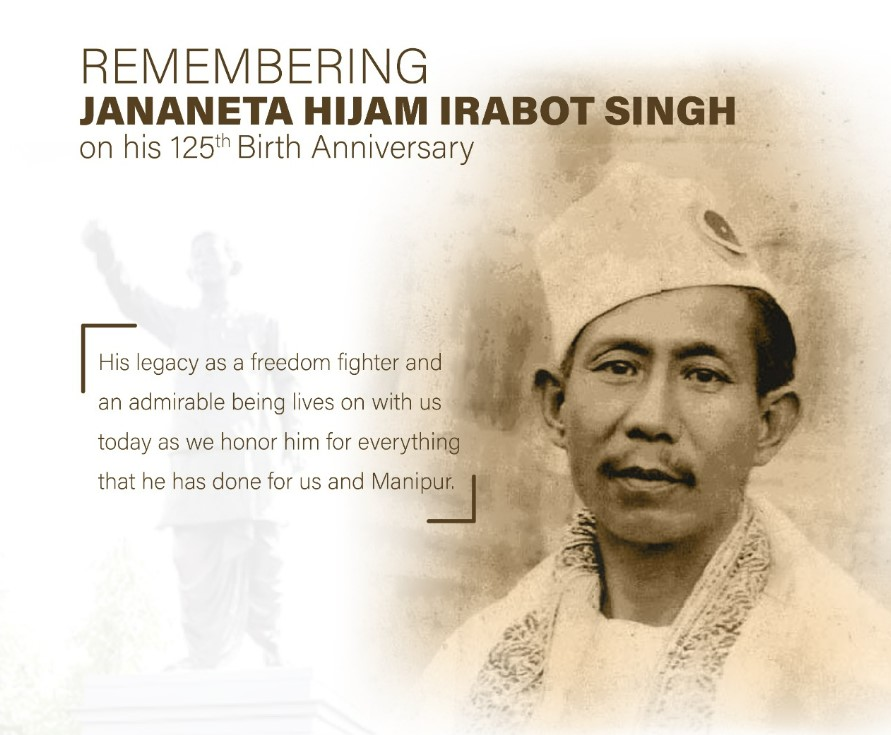
From Palace to People
The dramatic journey of an orphan who rose to the royal court and renounced privilege for the oppressed.
Early Life & Court Entry
Born into poverty at Pishumthong Oinam Leikai and orphaned in early childhood, Irabot was raised by his aunt. His fortunes changed when he married Princess Khomdonsana, niece of King Churachand, earning him entry into the highest chambers of the royal palace.
Education & Organizing
He studied at Johnstone School in Imphal and later in Dhaka. Driven by a passion for social upliftment, he mobilized youth by founding early student bodies including the Bal Sangha and Chhatra Sanmelan.
The Awakening
His appointment as a magistrate at the Sadar Panchayat Court gave him firsthand exposure to the systemic exploitation of common peasants under colonial and feudal rule, triggering his moral resignation and lifelong rebellion.
The Cultural Renaissance
Pioneering modern journalism, literature, dramatic arts, and civil rights in Manipur.
Pioneering Journalism
Founded Meitei Chanu (1922), the first handwritten journal in Manipur, followed by the political weekly Anouba Jug (The New Era). He transformed the printing press into a potent instrument of democratic consciousness.
Modern Literature
Celebrated as the first modern poet of Manipur, authoring Sheidam Sheireng. His stirring verses departed from courtly romanticism to give raw, dignified voice to farmers, weavers, and unfree laborers.
Theatre & Dramatic Arts
Founded the landmark Manipur Dramatic Union (MDU) in 1930 and designed its iconic emblem of two crossed ploughs. He mobilized theatre as an accessible public medium to dismantle feudal superstition.
Social Emancipation
Spearheaded relentless campaigns against the orthodox Brahminical Mangba-Sengba (pollution-purification tax) extortion system, striking at the economic and religious pillars of feudal domination.
The Revolutionary Crucible
The historic 1939 Women's War and the shift toward an egalitarian socialist democracy.
The Second Nupi Lan (1939)
The historic Second Nupi Lan (Women's War) was the turning point in Manipur's political awakening. When Manipuri market women rose in defiance against unchecked rice exports that created an artificial famine, Irabot immediately backed their struggle.
Breaking away from conservative factions that hesitated, he formed the Praja Sanmelani to mobilize peasants alongside women. Arrested by the British colonial administration, he served a three-year sentence in Sylhet Jail (1940–1943), where he joined hands with prominent communist thinkers and adopted Marxism-Leninism.
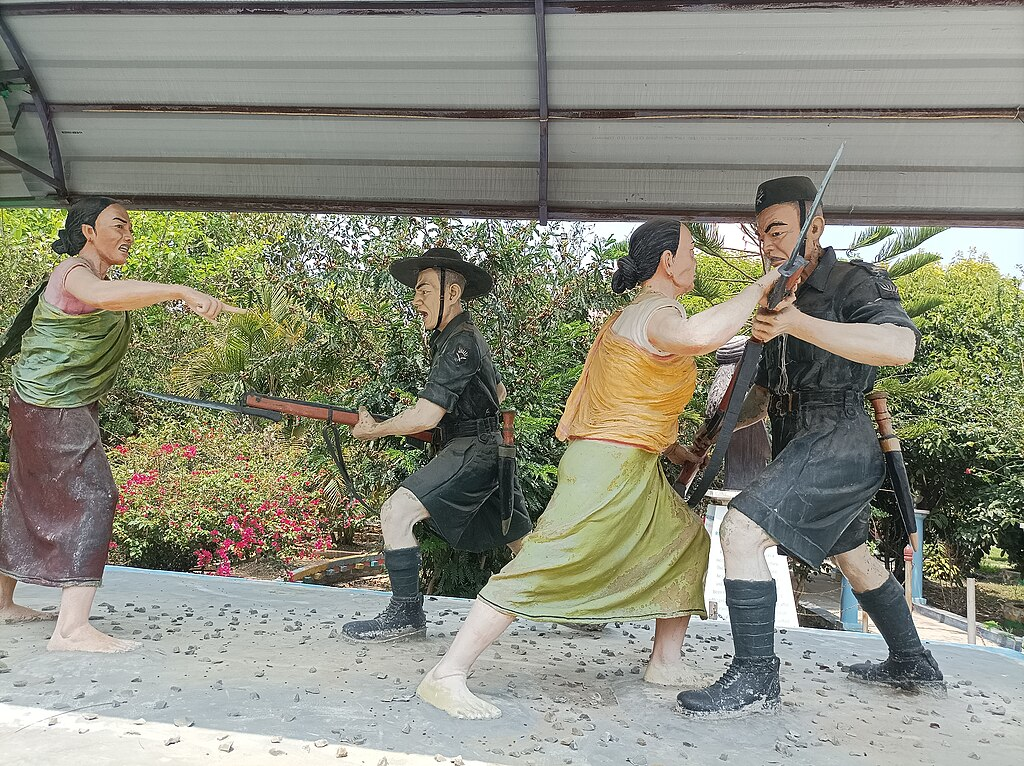
Statues commemorating the valiant women of the 1939 Nupi Lan in Imphal.
Milestones of a Revolutionary
Chronology of Hijam Irabot's historic political and cultural legacy.
Born in Imphal
Born at Pishumthong Oinam Leikai, initiating a life that would reshape modern Manipur.
Co-founded Nikhil Hindu Manipuri Mahasabha
Organized the first pan-Manipuri conference uniting disparate communities across the Northeast.
Secularization of the Mahasabha
Removed "Hindu" to form the secular Nikhil Manipuri Mahasabha, demanded a democratic legislature, and called for the release of freedom fighter Rani Gaidinliu.
Resignation from Sadar Panchayat
Severed official ties with the feudal court to lead the Praja Sanmelani in direct solidarity with the Second Nupi Lan.
Imprisonment in Sylhet Jail
Incarcerated by colonial authorities; embraced communist philosophy alongside national Marxist leaders.
Assembly Victory & Pungdongbam Incident
Won the Utlou seat in Manipur's historic first State Assembly election. Following the tragic police confrontation at Pungdongbam, his party was outlawed, forcing him underground.
Passing at Tangbo (Anggo Hills)
Breathed his last on September 26, 1951, in the border highlands, immortalized forever as the people's eternal guide.
Historical Photo Archives
Rare glimpses into the life, movement, and public commemoration of Hijam Irabot.
125th Birth Anniversary Commemorative Portrait
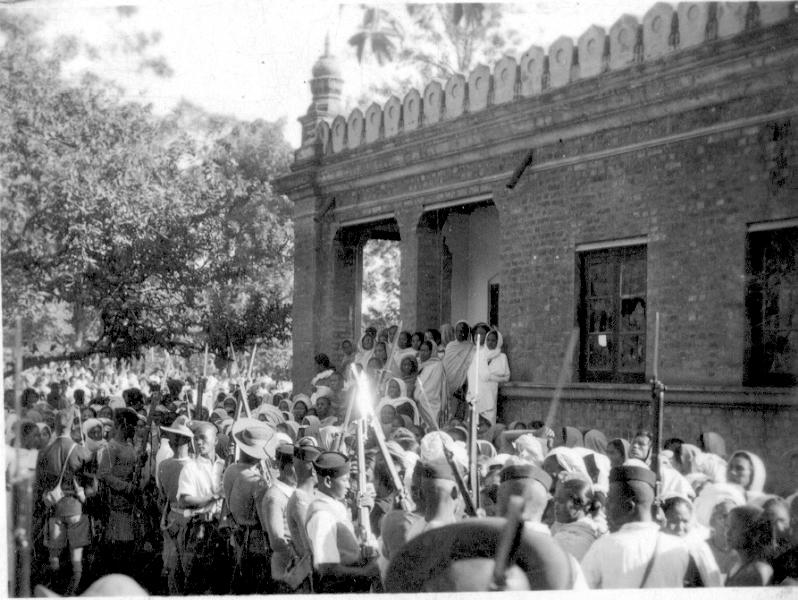
Nupi Lan: The Historic Women's War of 1939
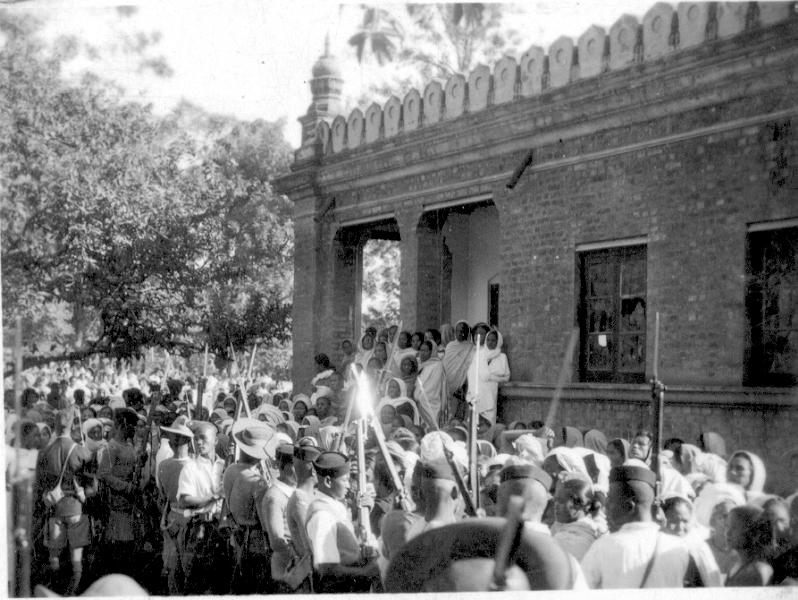
Archival Record of Women Demonstrators at Imphal
Memorial Sculptures Commemorating the 1939 Uprising
Hill-Valley Solidarity
Irabot passionately championed fraternal solidarity between the Meitei of the valley and the Naga and Kuki-Chin-Zo tribes of the hills, envisioning an indivisible, harmonious Manipur.
Democratic Sovereignty
He consistently defended the autonomy and self-determination of the Manipuri masses against both royal authoritarianism and unrepresentative administrative annexation.
- Irabot, Hijam. Meitei Chanu (Manipuri Woman) — First handwritten journal in Manipur, 1922.
- Irabot, Hijam. Sheidam Sheireng — Prescribed school poetry anthology, Imphal.
- Irabot, Hijam. Anouba Jug (The New Era) — Socio-political weekly publication.
- Proceedings of the Nikhil Manipuri Mahasabha Conferences (1934–1948).
- First Manipur State Assembly Election Returns (1948), Utlou Constituency.
- Assam Government Home & Political Department Records on the Second Nupi Lan (1939–1940).
- National Archives of India, New Delhi — Secret Department Intelligence Records (1948–1951).
- Singh, N. Lokendra. The Unquiet Valley: Society, Economy and Politics of Manipur (1891–1950). Mittal Publications, 1998.
- Yumnam, Nabakumar. Hijam Irabot: The Patriot and Humanist. Imphal, 2000.
- Sanajaoba, Naorem (Ed.). Manipur: Past and Present (Volume 1). Mittal Publications.
- Parratt, Saroj Nalini Arambam. The Court Chronicle of the Kings of Manipur: Cheitharon Kumpapa. Routledge, 2005.
